Be yourself; Everyone else is already taken.
— Oscar Wilde.
This is the first post on my new blog. I’m just getting this new blog going, so stay tuned for more. Subscribe below to get notified when I post new updates.
Be yourself; Everyone else is already taken.
— Oscar Wilde.
This is the first post on my new blog. I’m just getting this new blog going, so stay tuned for more. Subscribe below to get notified when I post new updates.
Sudan’s economy overview:
Sudan is the largest export economy which is ranked 110th in the world and 120th most complex economy according to the Economic Complexity Index (ECI). Sudan is situated at the crossroads of Sub-Saharan Africa and the Middle East which is bordered by the seven countries namely Egypt, Eritrea, Ethiopia, South Sudan, the Central African Republic, Chad, and Libya. Sudan has been beset by conflicts. The terms of a Peace agreement 2005 under it the southern states seceded, which formed the Republic of South Sudan in 2011.
After this secession of South Sudan induced multiple economic shocks. It was considered as the most important and immediate shock which was the loss of oil revenue that accounts for more than half of Sudan’s government revenue and 95% of its exports.
The economy of Sudan has independent of the increases in oil production, high oil prices and large inflows of foreign direct investment which was till the second half of 2002. The GDP growth per year in 2006 and 2007 was more than 10% per year. Sudan as a country is working the IMF for implementation of macroeconomic reforms which includes a managed float of the exchange rate.
Agricultural production has remained important as it employs 80% of its workforce which contributes a third of GDP. 2012 was a very significant year for the new Sudan reflecting the complete impact of secession on the economy. Reform measures which was introduced to redress the domestic and external macroeconomic which created imbalances which resulted in the oil loss which was placed from the medium- term and long term perspective, which also provided that measures of these are accompanied by the correct mix of policies which was aimed at the revitalization of the non productive sector (the agricultural sector). This has a potential for the creation of backlashes in the immediate and short term in which social tensions can be witnessed in the duration of the last two weeks which was followed by the phase-out of fuel subsidies.
With the context of its economy, it has been estimated that the country’s total investment amounted to 21.1 million Sudanese pounds in current prices. The investment of sectoral investment was such that the bulk was mostly in the real estate sector (38.7%) which was followed by the government sector (which accounted for 21.7%), transport (19.7%) and agriculture (8.5%). Manufacturing investment amounted to only 2.5% of the total of its total investment in 1955/56, which was estimated that 54% was contributed by the public sector which left a balance of 46% for its private sector. The structure of the economy was with the composition of Sudan’s exports at its independence which was dominated exclusively by primary products.
1. Analyzing the trends of GDP:
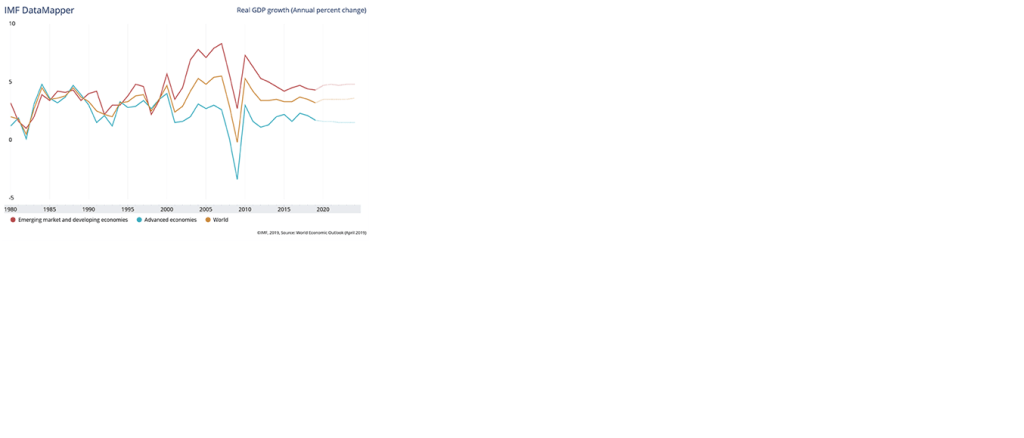
Sudan’s pre secession was one of the fastest growing oil led countries until its global financial and economic crisis which occurred in 2007.The study conducted by UNDP recently and the Ministry of Finance and National economy, the real GDP growth had been increasing at a decreasing rate, from its peak of 10.9 % in 2007 with a low of about 5% in 2010. Since there was advent of oil in 1999 up to 2010 (known as the oil boom period), service sector during this period expanded fast surpassing agriculture which was the leading sector of the economy. Both utilities and service sector played an important sector which was also in decline during the same period and it continued to employ the bulk work force which contributed on average about a third of GDP. On July 9, 2011 has brought significant changes in the socio-economic landscape of Sudan.
There were changes observed in the economic structure in the years which was related to oil. It has been observed that the share of industry declined by almost 5% percentage points from 25% percent in 2009. The report by the UNDP human development report, GDP per capita in 2005 terms estimated that at $1878 USD and population growth was estimated at 2.4% in 2012. It was observed that there was a sharp increase in per capita GDP until 2006 which could be explained by the increase in oil income and peace dividend.
The World Bank has observed that Sudan has lost 75% of its oil reserves and 20% of its population. The three Years (2012-2014) launched the program for the Sustainability of Economic Stabilization, within their framework of their country’s new five year National Development plan (2012-2016) which is aimed at smooth functioning of the transition from oil led growth to agriculture and growth in manufacturing. This also included relevant social safety measures. The success of this program can be determined by the right macroeconomic policy mixes and prudence in the implementation of them. This can also be a downside to Sudan’s growth prospect during the medium term.
2. Analyzing the trend of Exports and Imports in Sudan:
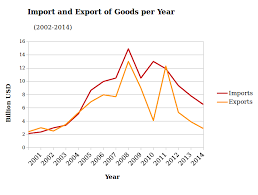
Sudan’s Exports are $4.67B and the country’s Imports are $9.9B.
The country’s top export goods are Gold ($1.51B), Crude petroleum ($720M), Goats and Sheep ($476M) and other oil seeds ($458M) and other animals ($302M) and top destination for exports of Sudan are China ($611M), Saudi Arabia ($600M) and the United Arab Emirates ($1.71B) and India ($426M) and Egypt ($394M).
The country’s top imports are Wheat ($977M), Refined Petroleum ($718M), and Raw sugar ($425M), Unpackaged Medicaments ($263M) and Cars ($251M). Origins which are used for Sudan’s imports are China ($2.34B), the United Arab Emirates, India ($834M) and Saudi Arabia ($638M) and Russia ($638M).
The export performance for the pro rating for the year 2013 and the first two quarters, exports has been expected to rebound by 79% compared to year 2012. There is an overall increase in exports is widely attributed to nonoil exports such as gold.
After the secession that occurred in South Sudan, Sudan attempted to generate new sources of export revenues which is from gold mining, which was carried out with an austerity program was to reduce the expenditures which will balance the budget. It was also noted and the Government introduced measures to redress the external imbalance. This reform which was made to adjust the exchange regime was well placed from a medium term and long term perspective and it also provided that these measures are accompanied by the right mix of macroeconomics policies.
3. Analyzing trends of Inflation:
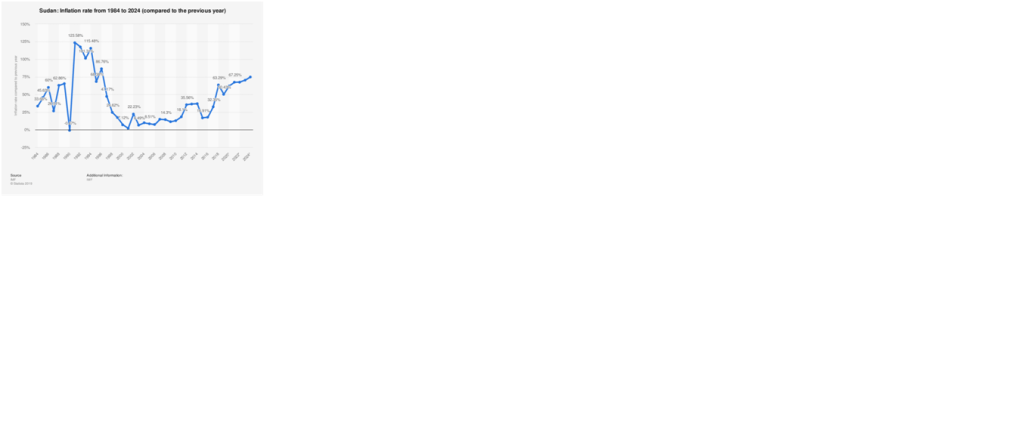
The economy of Sudan has suffered from inflationary pressure which was intense since the referendum of January 2011 where secession took place and Sudan become clear that the country will soon be losing much of its oil income and the hard currency which was involved. The country’s official annual inflation rate for 2013 was at 36.5% and within a year it went to 40% and it peaked at March 2013 was at 48%. The component of food which accounted on an average for 53% of household expenditure which derived the overall inflation in Sudan followed by the housing sector (14%) and transport (8%). The 3 following groups of consumer items together, in an average account more than 70% of household expenditure. The inflation caused by food price was compounded by imported inflation as many food items were imported. Even though the general inflation dropped from its peak level of 48% in March 2013 to 23% by the end of August 2013, the declined trend was reverse and followed by the suspension of fuel subsides in September 2013. The component of transport was the major driver of this.
4. Unemployment and Poverty trend in Sudan:
There is high unemployment rate in the country with a rising population that was increased and urban remains one of the Government’s major challenges. Among the youth unemployment was highest which a cause for concern in the population is where more than half the population is under the age of 24.
Poverty where half the population lived in poverty. During the period of secession of South Sudan in the year of 2011, Sudan has become poorer and a reality was illustrated by its sudden drop on the Human development Index. During the year of 2011 it was ranked 154th and two years later in 2012 it was ranked 171st place.
Conclusion:
The transition from an oil led economy to the non oil production sector is yet to come to function. And this is called for a diversification in the potential sources for growth (such as manufacturing and agriculture) by the development of appropriate macro policies which is used to enhance the capacity of the non oil productive sectors. The fast expanding of the service sector with relation to the production sector (industry and agriculture) which has served the inflation.
It’s the government’s responsibility to pursue the right mix of macroeconomic policies which is used to stimulate the non oil production sector in the general and the agricultural and mainly focused on the agro processing sectors in particular. This would help Sudan to improve their food supplies and expand its export base in the coming years.
This is an example post, originally published as part of Blogging University. Enroll in one of our ten programs, and start your blog right.
You’re going to publish a post today. Don’t worry about how your blog looks. Don’t worry if you haven’t given it a name yet, or you’re feeling overwhelmed. Just click the “New Post” button, and tell us why you’re here.
Why do this?
The post can be short or long, a personal intro to your life or a bloggy mission statement, a manifesto for the future or a simple outline of your the types of things you hope to publish.
To help you get started, here are a few questions:
You’re not locked into any of this; one of the wonderful things about blogs is how they constantly evolve as we learn, grow, and interact with one another — but it’s good to know where and why you started, and articulating your goals may just give you a few other post ideas.
Can’t think how to get started? Just write the first thing that pops into your head. Anne Lamott, author of a book on writing we love, says that you need to give yourself permission to write a “crappy first draft”. Anne makes a great point — just start writing, and worry about editing it later.
When you’re ready to publish, give your post three to five tags that describe your blog’s focus — writing, photography, fiction, parenting, food, cars, movies, sports, whatever. These tags will help others who care about your topics find you in the Reader. Make sure one of the tags is “zerotohero,” so other new bloggers can find you, too.

 Sudan's Economy